
VINT, component of the Visual Piano System

VINT by example
Now we are ready to play the second line of VINT, same as before, we read from left to right.
Line 2

Note 6
Note 7
Note 8
Note 9
Note 10
The last note we played in line 1 was G. Now, with a Minor 2nd descending, the next note is F#.
Note 6
Note 7
Note 8
Note 9
Note 10

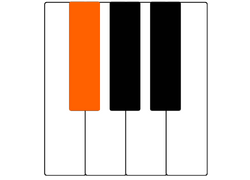
Note 6
Play note F#
Note 6
Note 7
Note 8
Note 9
Note 10
Note 7
Play note D
Next, we have a Major 3rd descending VINT, which means we play the note D (with three notes in between).

Note 6
Note 7
Note 8
Note 9
Note 10
Now we have a Unison VINT, which means we play the same note again, that's D.
Note 8
Play note D
Note 6
Note 7
Note 8
Note 9
Note 10
Note 9
Now we have a Major 2nd ascending: one note between the source and target notes. It’s ascending because it’s shown in red.

Play note E
Note 6
Note 7
Note 8
Note 9
Note 10
Now we have a Major 2nd descending: one note between the source and target notes. It’s descending because it’s shown in blue.
Play note D
Note 10
You're getting it! You've just played your second line of VINT! Now for the third line, ready?
Line 2 review
Here is line 2 in a more digestible form for you:

Note 6

Note 7
Note 8
Note 9
Note 10
D
E
D
G


Complete review
Here are Lines 1 and 2 with the actual notes written inside the VINTs. Remember, the starting note is D, so everything is relative to that note.

LINE 1
LINE 2
E
F#
G
D
D
D
D
D
E
D

