
VINT, component of the Visual Piano System

VINT by example
We’re in the flow now - let’s play the fourth line! You’re probably starting to see just how intuitive VINT really is.
Line 4

Note 16
Note 17
Note 18
Note 19
Note 20
The last note we played from line 3 was note D. Now we have a Major 2nd descending so the next note we play is B.


Note 16
Play note B

Note 16
Note 17
Note 18
Note 19
Note 20
Note 17
Play note G
Next is a descending Major 3rd, which means three notes in between the last note and our target, G.

Note 16
Note 17
Note 18
Note 19
Note 20
Now we have a Minor 2nd descending (no notes in between the source & target note). So we play note F#.
Note 18
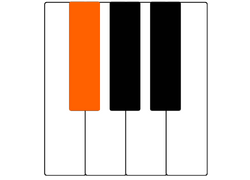
Play note F#
Note 16
Note 17
Note 18
Note 19
Note 20
Note 19
Now we have a Major 2nd descending which means we need to play the note E.

Note 16
Note 17
Note 18
Note 19
Note 20
Next we have a Minor 7th ascending VINT, which means we need to go up in pitch with seven in between notes. Play the note C.

Play note C
Note 20
Note 16
Note 17
Note 18
Note 19
Note 20
Awesome! You've just played your forth line of VINT! One final line to go any you've played your first VINT melody.
Play note E
Line 4 review
Here is line 4 in a more digestible form for you:

B
G
F#
E
C


Note 16
Note 17
Note 18
Note 19
Note 20
Complete review
Here are lines 1 to 3 for you with the actual notes written inside the VINT. Remember the starting note is D so everything is relative from the note D.

LINE 1
LINE 4
E
F#
G
A
B
D
D
D
E
D
D
G
D
D
D
LINE 2
D
G
F#
E
C
LINE 3

